

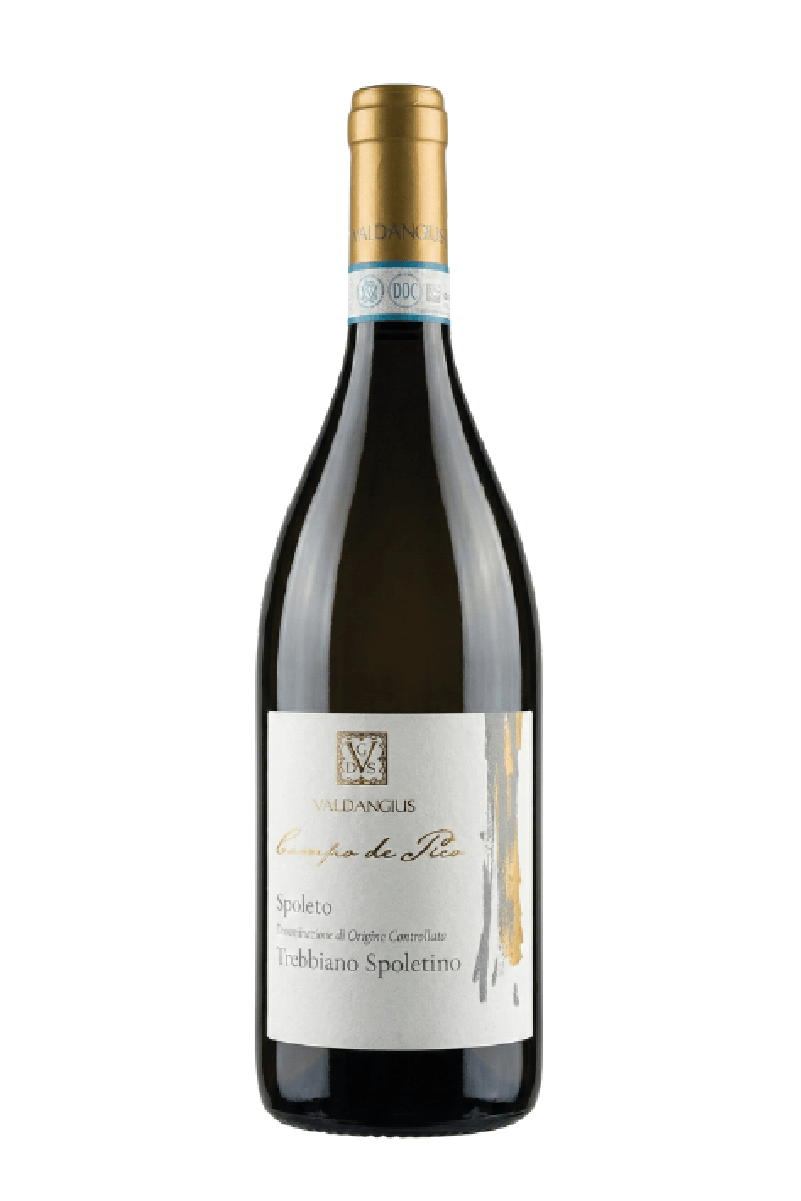
Trebbiano Spoletino Campo de Pico
Trebbiano Spoletino Campo de Pico
29 op voorraad
Afhaalbeschikbaarheid kon niet worden geladen
Producer: Valdangius
Valdangius, located in the historic Località San Marco in Montefalco, is an artisanal producer whose identity is entirely shaped by the terroir. San Marco has been regarded for generations as one of the most suitable crus in the region, thanks to its limestone-clay soils, optimal exposure, and pronounced temperature variations. This combination yields grapes with high aromatic concentration, natural freshness, and a clear structural backbone.
Montefalco – often called the “balcony of Umbria” – forms the natural setting where indigenous varieties such as Sagrantino and Trebbiano Spoletino reach their fullest expression. The mineral richness of the soil, the constant Apennine ventilation, and the centuries-old winemaking tradition create a microclimate that produces wines with depth, intensity, and long aging potential.
Valdangius practices artisanal and sustainable vineyard management, approaching each plot individually to let the specific soil characteristics speak. The philosophy is one of minimal intervention: listening to the rhythm of the seasons, respecting the uniqueness of each vintage, and allowing the terroir to determine the choices made in the cellar. The result is wines with a clear provenance signature, characterized by tension, precision, and a pure translation of the Montefalco landscape.
Region: Montefalco - San Marco
Variety: 100% Trebbiano Spoletino
Vintage: 2024
Vinification:
Cold maceration with the skins for 24–36 hours, followed by gentle pressing. Spontaneous fermentation takes place in stainless steel at controlled temperature. The wine remains on the fine lees in inox for 5 months, with periodic bâtonnage. It then rests for at least 3 months in bottle before release.
Color/ bouquet/ taste:
The wine shows a straw-yellow color with subtle greenish reflections, indicative of youth and reductive protection during vinification. On the nose, it presents concentrated primary aromas with a combination of tropical fruit, citrus components (lemon, lime), and distinct mineral accents. Vegetal nuances support the aromatic profile without dominating.
On the palate, the entry is tight and linear, supported by a marked, well-integrated acidity. The saline, juicy component provides tension and length, while the soft texture — derived from aging on fine lees — ensures balance. The finish is elegant, persistent, and precisely defined, with a clear return of mineral notes.
This producer invited us during Vinitaly, and we did not regret it: they make wines that, like true gems, flawlessly express the intrinsic identity of each grape.
Food Pairings:
-
Raw and marinated fish — sea bass carpaccio, ceviche, dorade tartare. The high acidity and salinity enhance the freshness of raw preparations.
-
Shellfish — scampi, prawns, grilled langoustines. The mineral component pairs beautifully with the natural sweetness of shellfish.
-
White fish dishes — cod, haddock, sole, possibly with citrus ingredients or light cream sauce. The tension in the wine keeps the whole tight and precise.
-
Vegetable dishes — asparagus, artichoke, zucchini, fennel, risotto alle verdure. The vegetal notes on the nose make this a particularly harmonious pairing.
-
White meat dishes — supreme chicken, turkey, rabbit with light sauce. The soft texture from lees aging supports subtle meat preparations.
-
Mediterranean cuisine — pasta al limone, linguine alle vongole, risotto with lemon and herbs. The citrus and mineral tones perfectly complement these aromatic profiles.
-
Fresh cheeses — burrata, mozzarella, young goat cheese, ricotta. The acidity cuts through the fat and keeps the whole fresh.
Serving temperature: 11-12 °C
Aging potential: 10 years. Drink from 2026
Alcohol: 13.5%
Blog posts
Bekijk alle-
De smaak van de herfst – één glas, één gerecht,...
De herfst is het seizoen waarin smaken dieper worden, geuren intenser, en wijn en gerecht elkaar vinden in een natuurlijke balans.Bij Vino Celeste geloven we dat de juiste combinatie niet...
De smaak van de herfst – één glas, één gerecht,...
De herfst is het seizoen waarin smaken dieper worden, geuren intenser, en wijn en gerecht elkaar vinden in een natuurlijke balans.Bij Vino Celeste geloven we dat de juiste combinatie niet...
-
Twee iconen van het zuiden: een ode aan zon, wi...
Zuid-Italië, waar de zon lager zakt, de lucht zwaarder geurt en de tijd trager lijkt te gaan.Daar, tussen rots, zee en wind, ontstaan wijnen die niet alleen geproefd worden, maar...
Twee iconen van het zuiden: een ode aan zon, wi...
Zuid-Italië, waar de zon lager zakt, de lucht zwaarder geurt en de tijd trager lijkt te gaan.Daar, tussen rots, zee en wind, ontstaan wijnen die niet alleen geproefd worden, maar...
-
De stille revolutie van Valpolicella begint in ...
Een familie met een visie Op een steenworp van Verona, in de groene Val Squaranto, werkt de familie Roncari met hart en ziel aan wijnen die het karakter van Valpolicella...
De stille revolutie van Valpolicella begint in ...
Een familie met een visie Op een steenworp van Verona, in de groene Val Squaranto, werkt de familie Roncari met hart en ziel aan wijnen die het karakter van Valpolicella...
